The American West is often defined by the rough and tough cowboy — dirty boots, sunburned necks, and calloused hands. It is the iconic image of America. After the completion of the Transcontinental Railroad in May of 1869, Easterners went West. But after a few years, they eventually came back, bringing with them stories and culture of
the “Wild West.” This migration created a new national identity shaped by westward expansion and rugged individualism that influenced fashion, literature, and values back East.
the “Wild West.” This migration created a new national identity shaped by westward expansion and rugged individualism that influenced fashion, literature, and values back East.
With the opening of organizations like the American Quarter Horse Association (AQHA) in 1940, American western riding became formalized into competition classes. These classes include Western Pleasure, Trail, Reining, Trail, and Ranch Riding, each with its own rules and regulations. These competitions grew from festivals and rodeos into a nationally recognized sport.
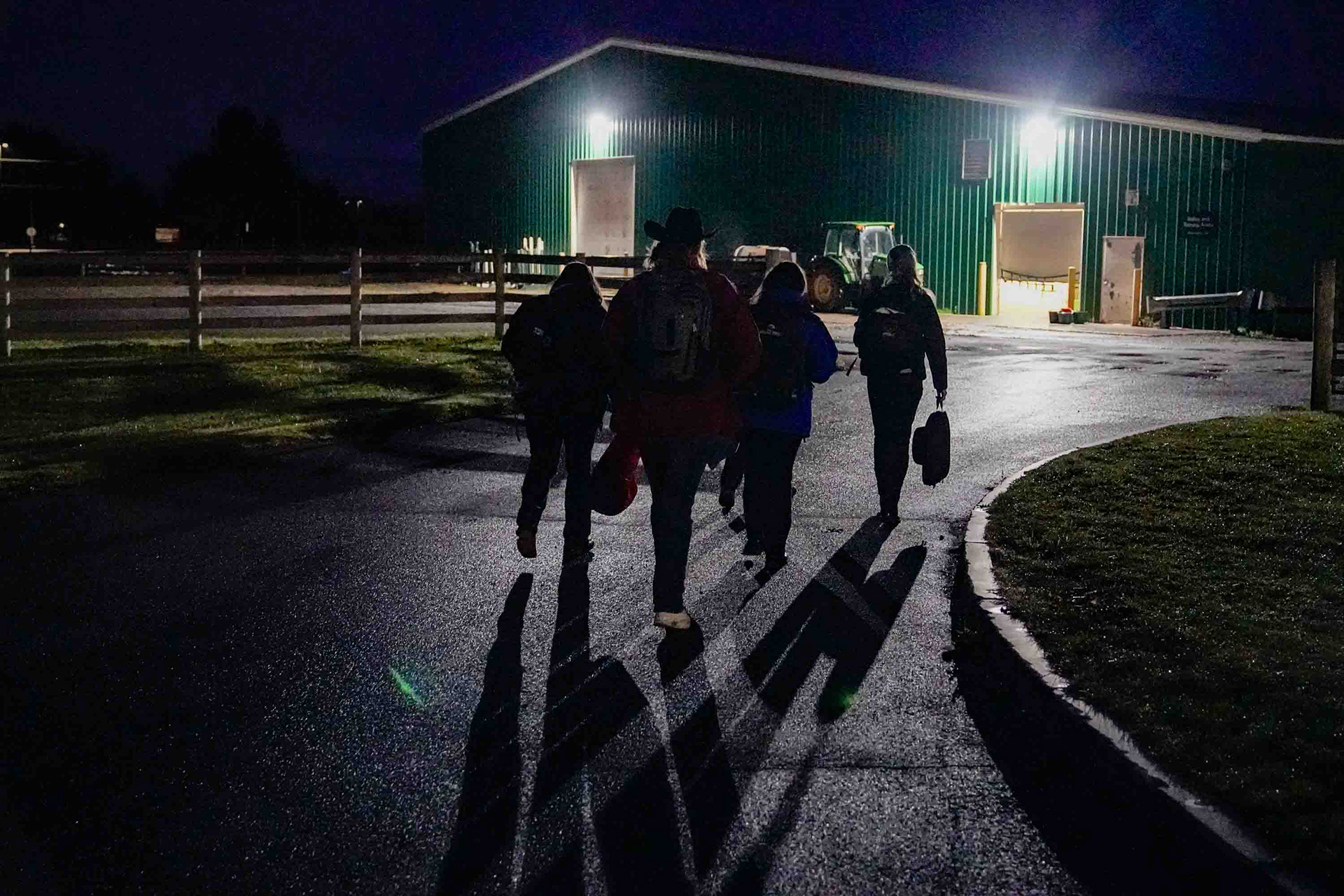
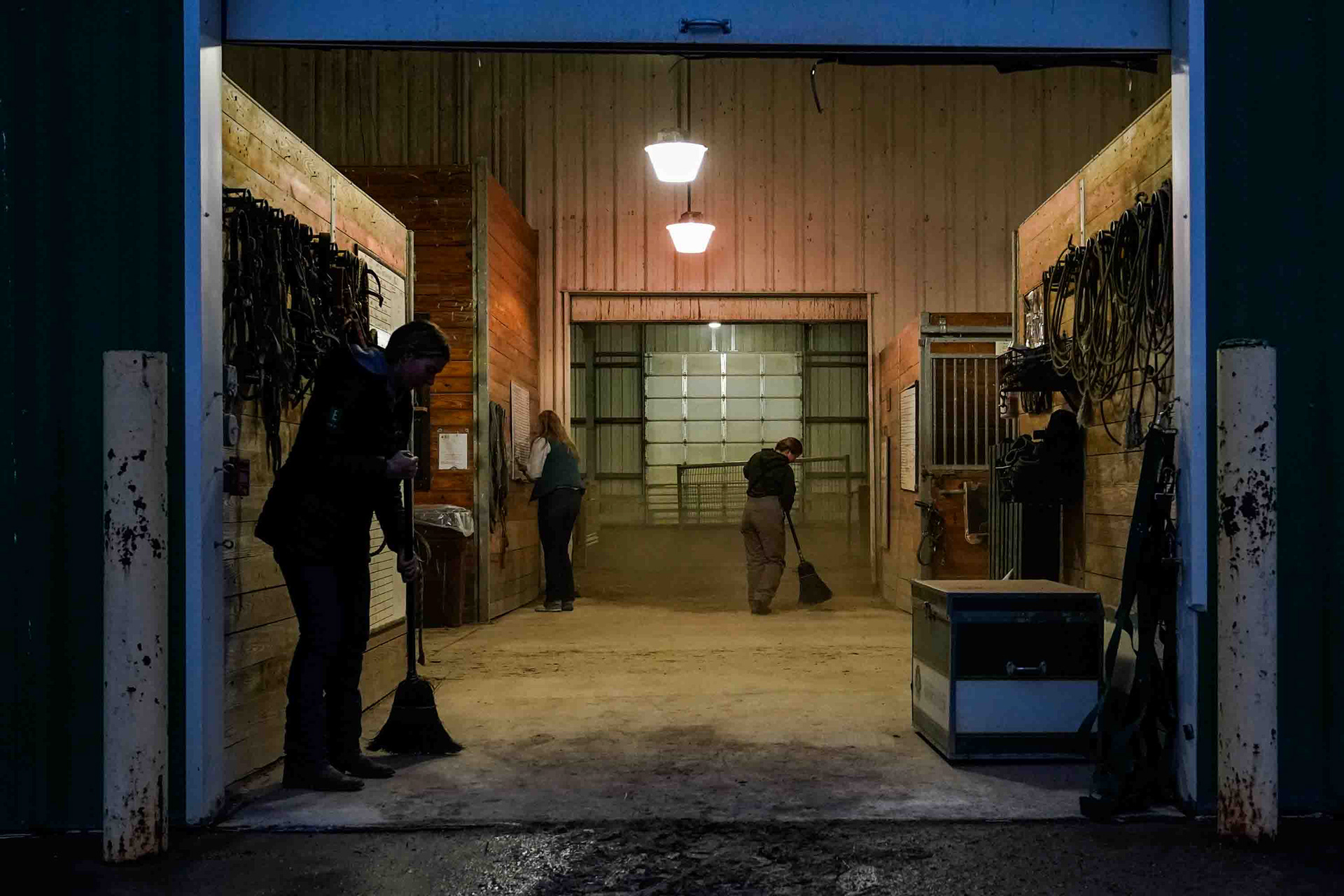
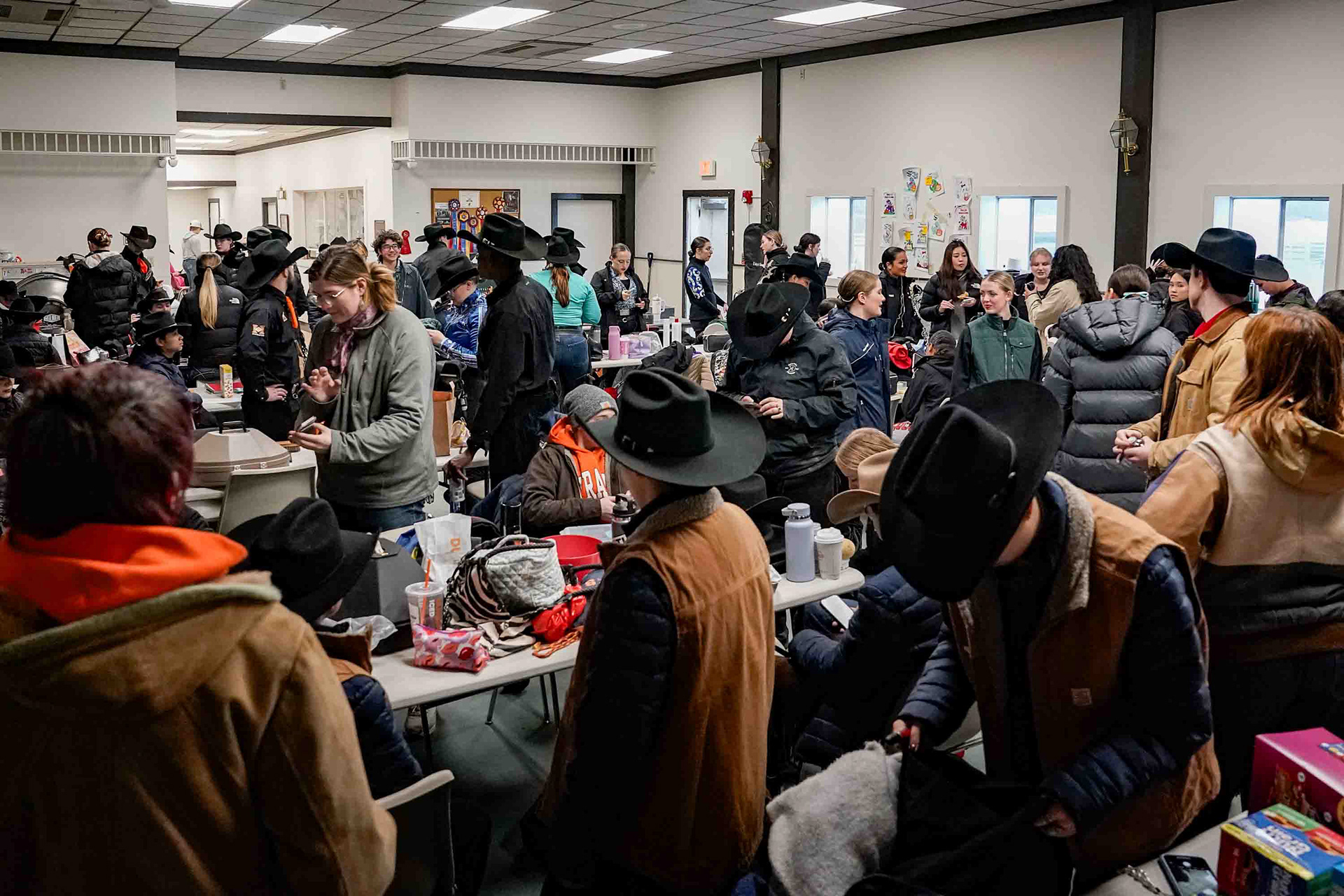
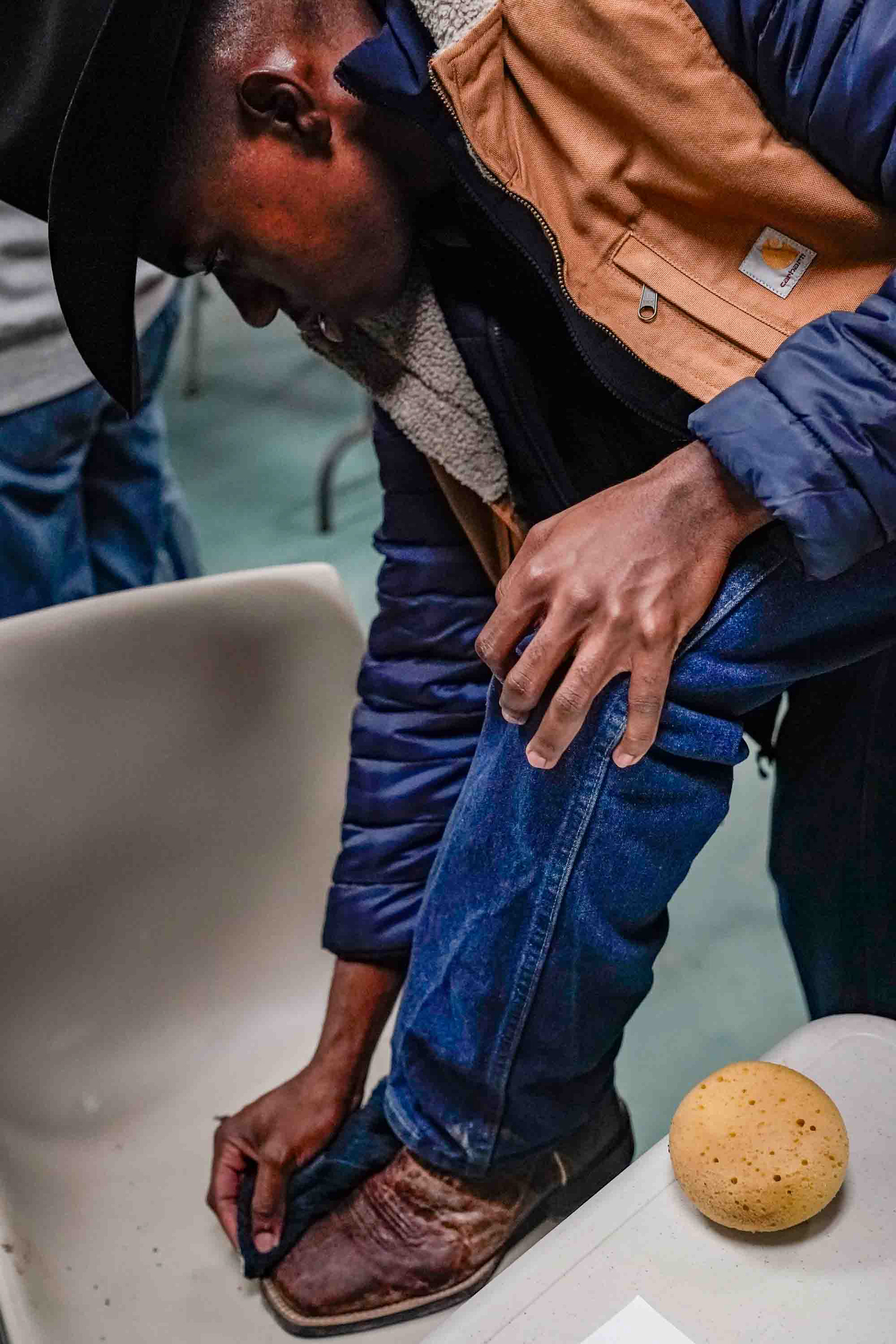
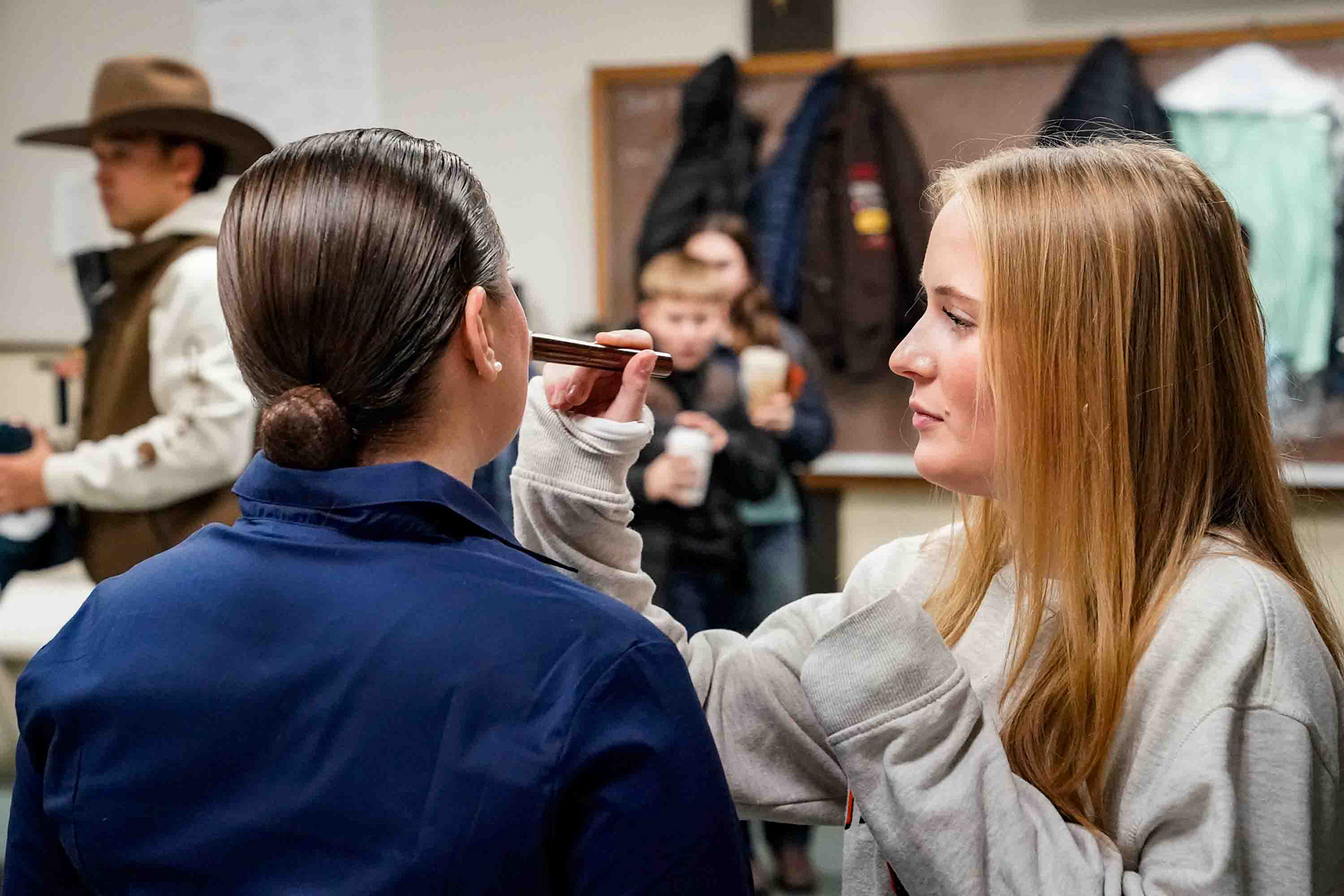
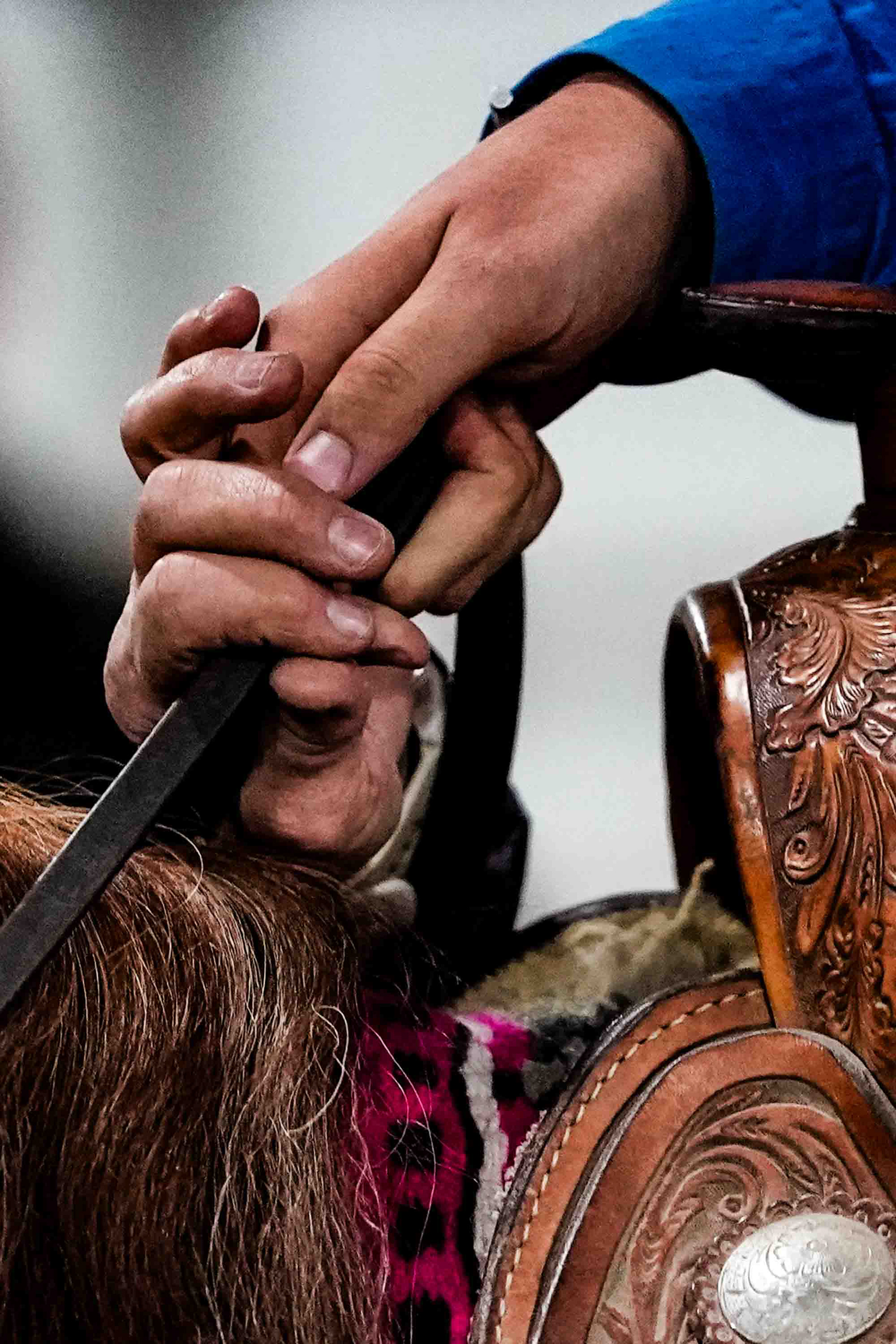
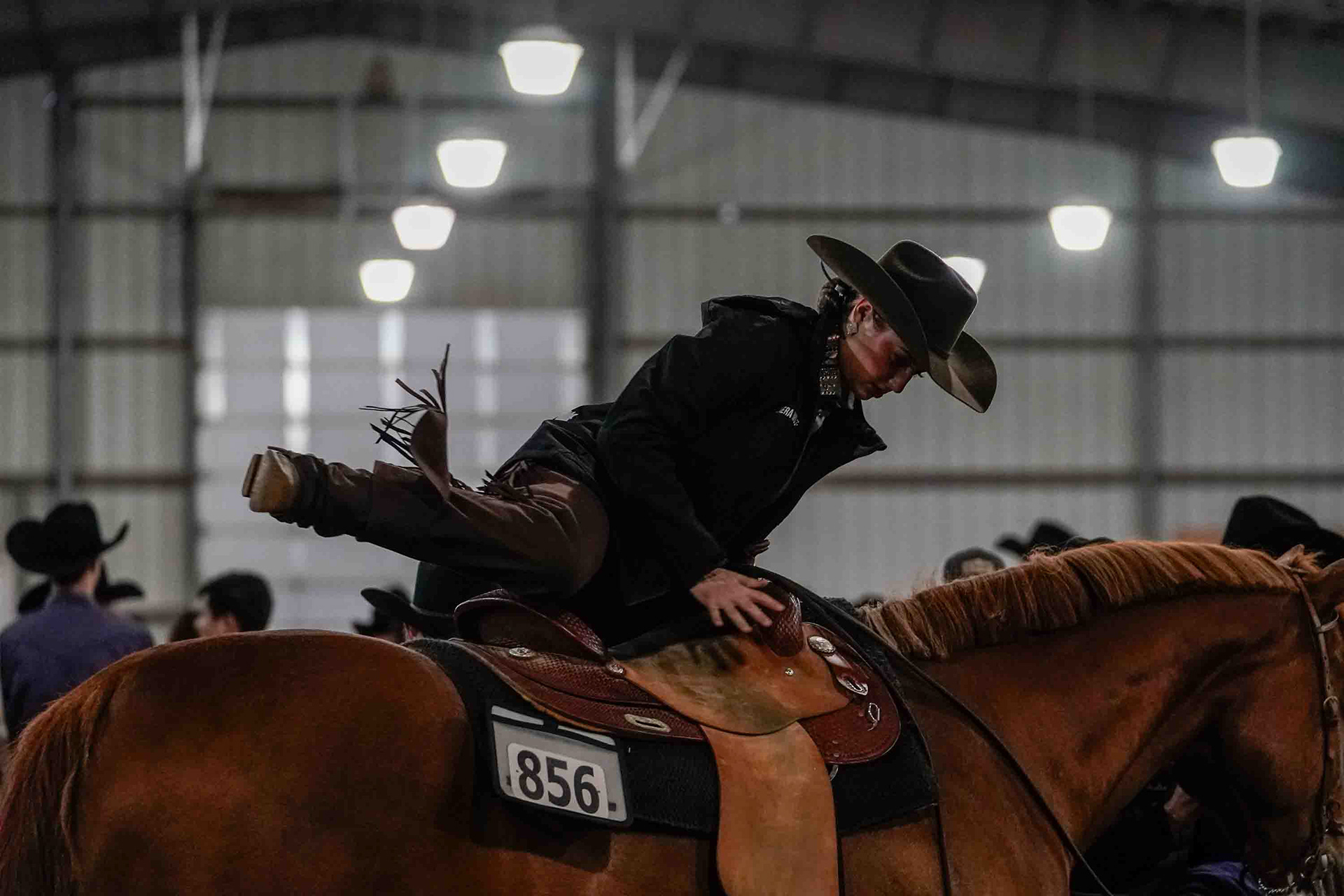
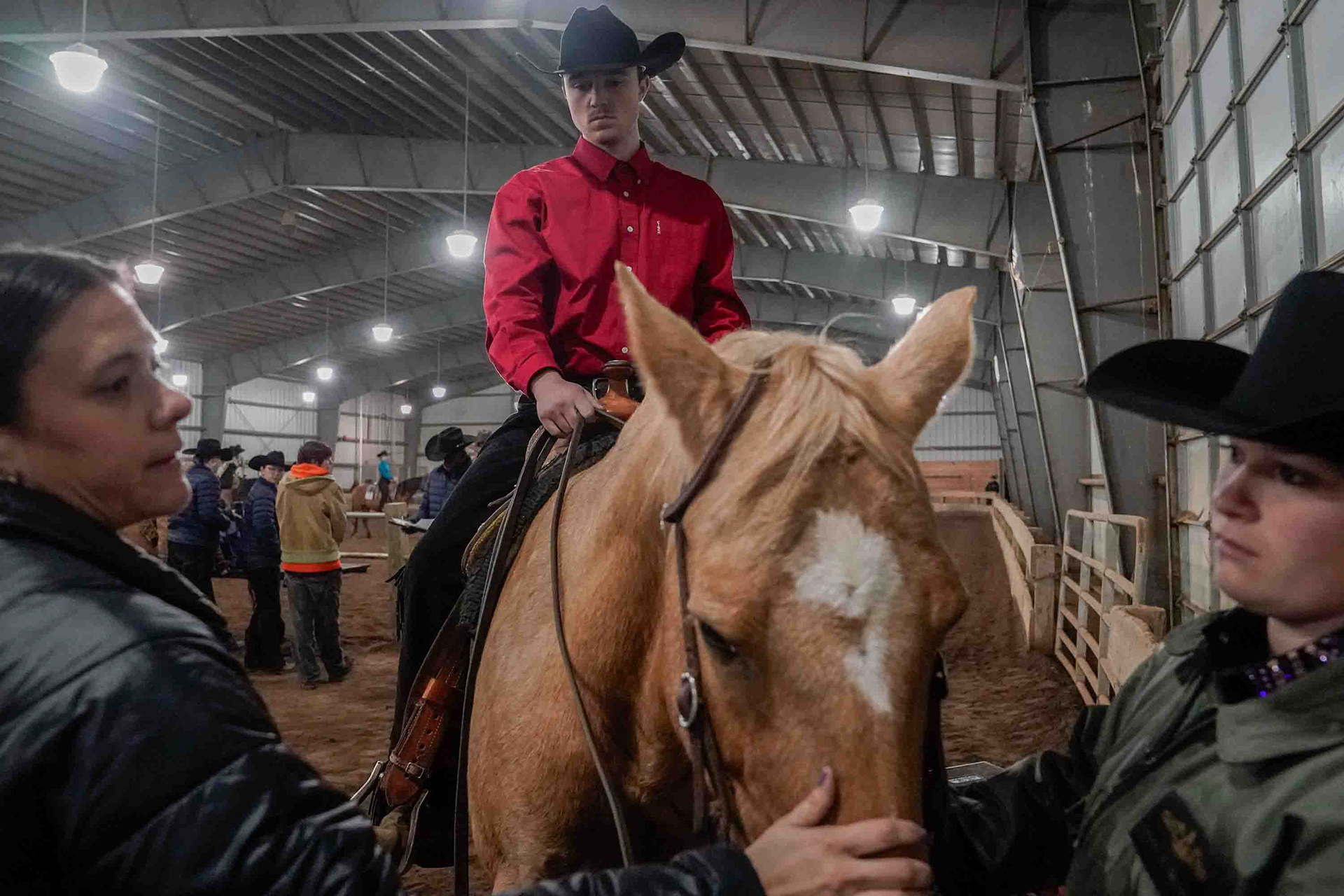
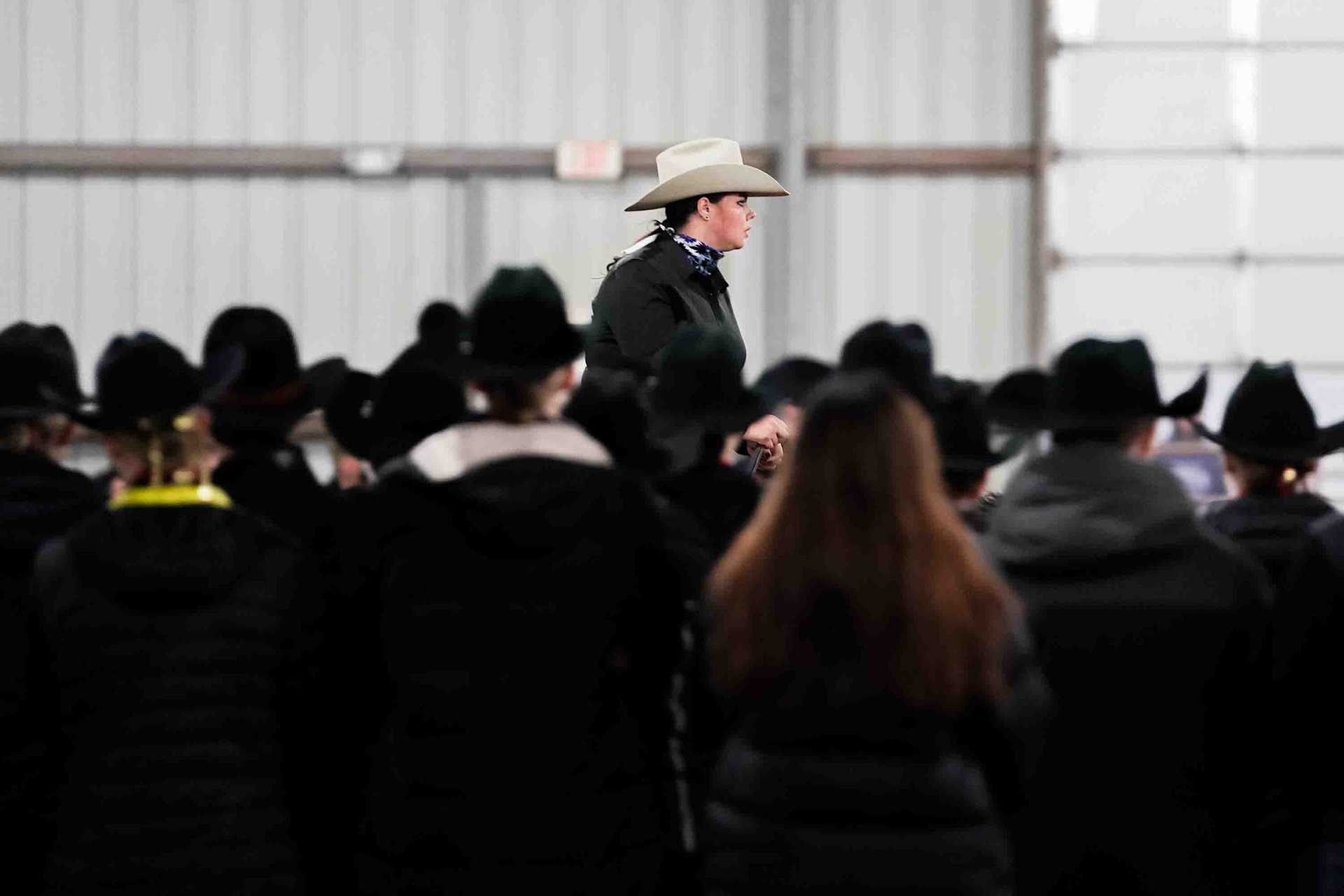
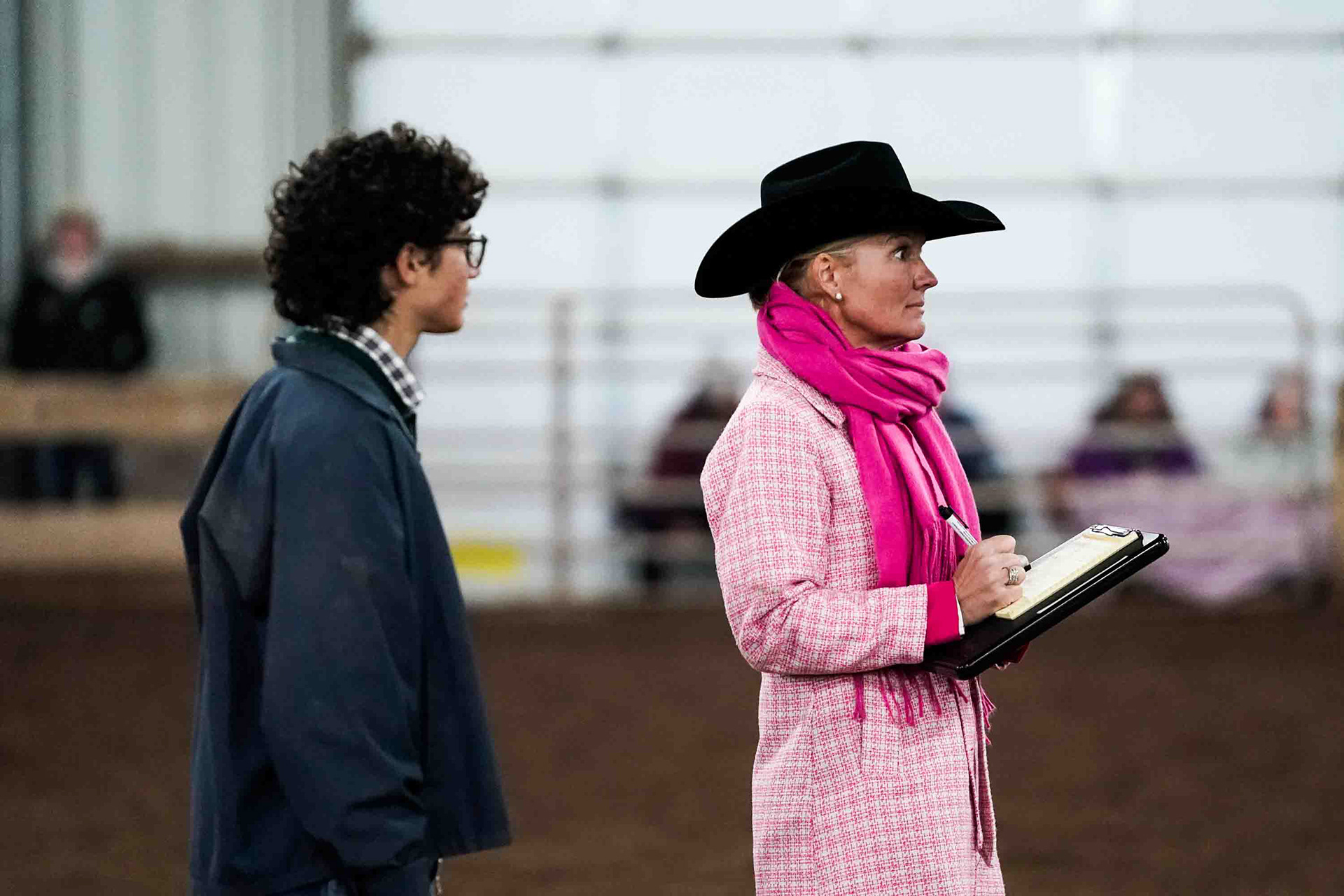
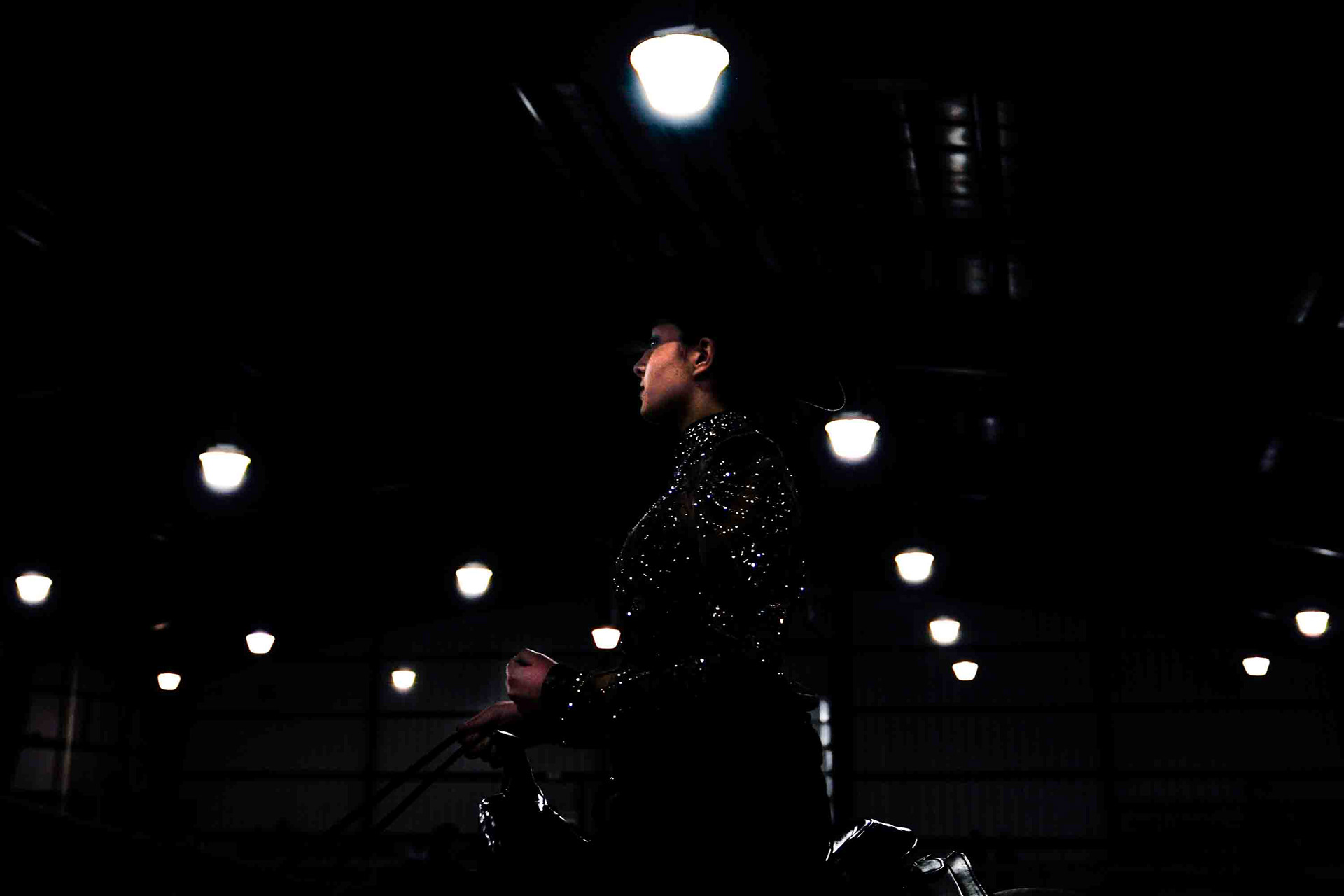
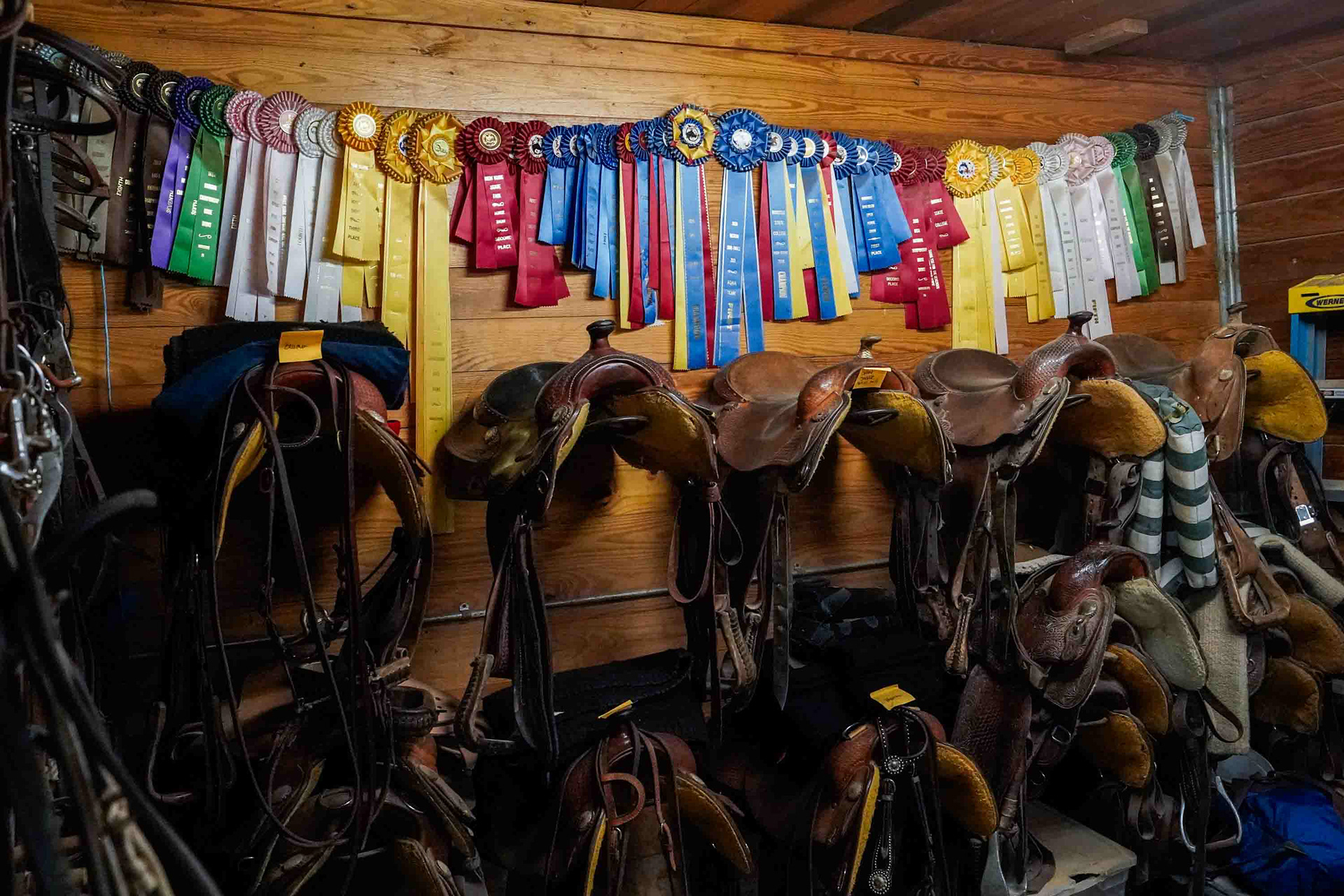
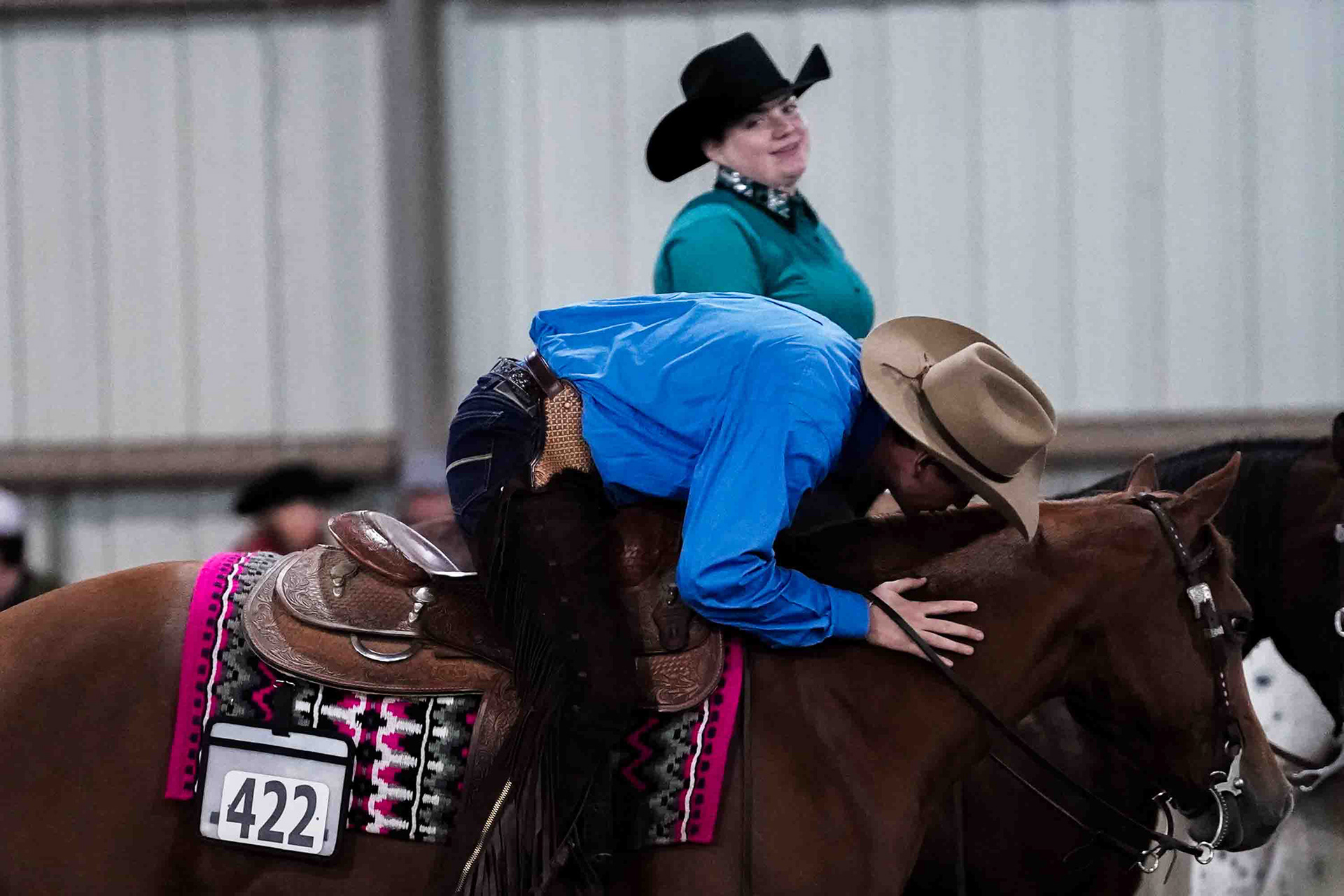
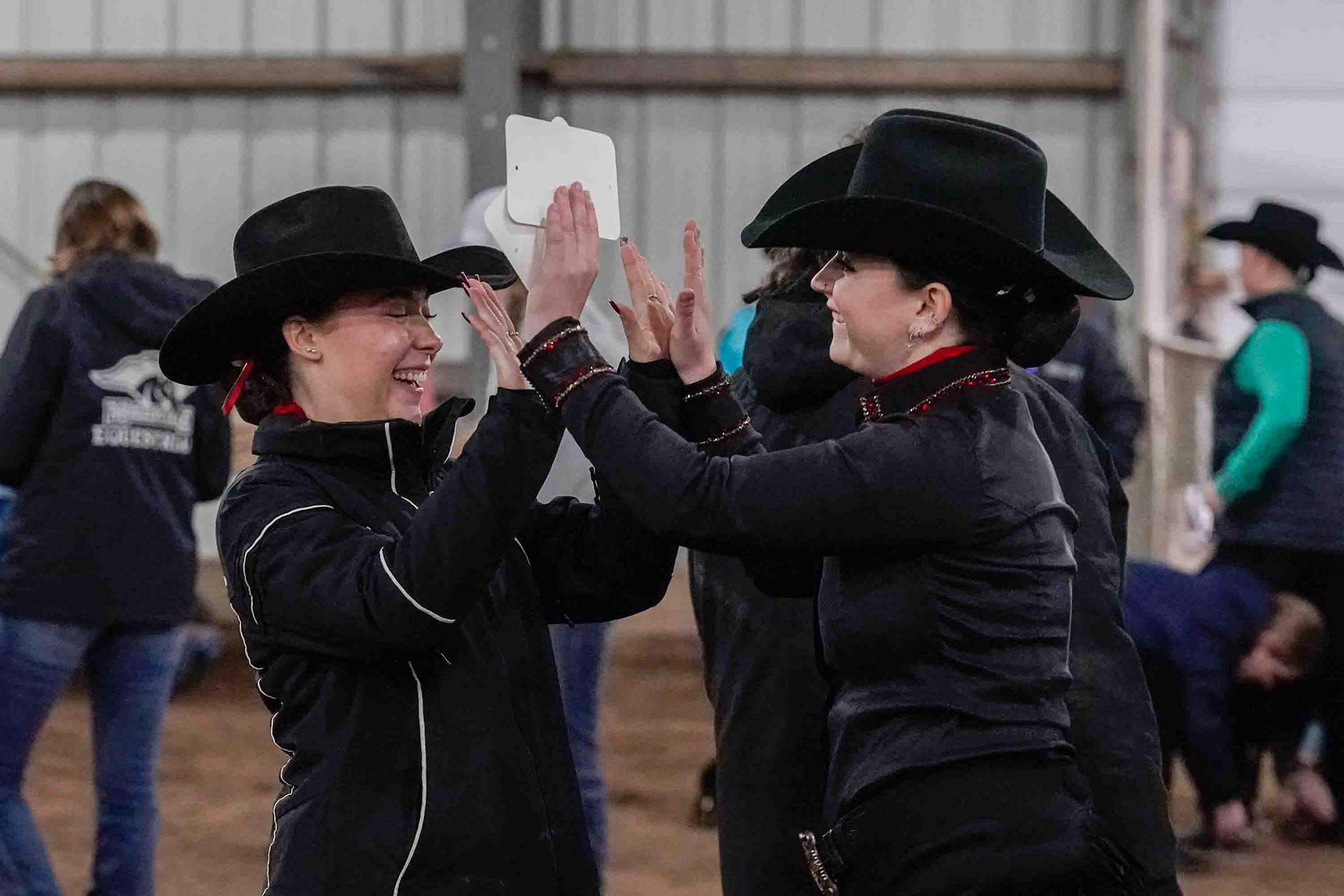
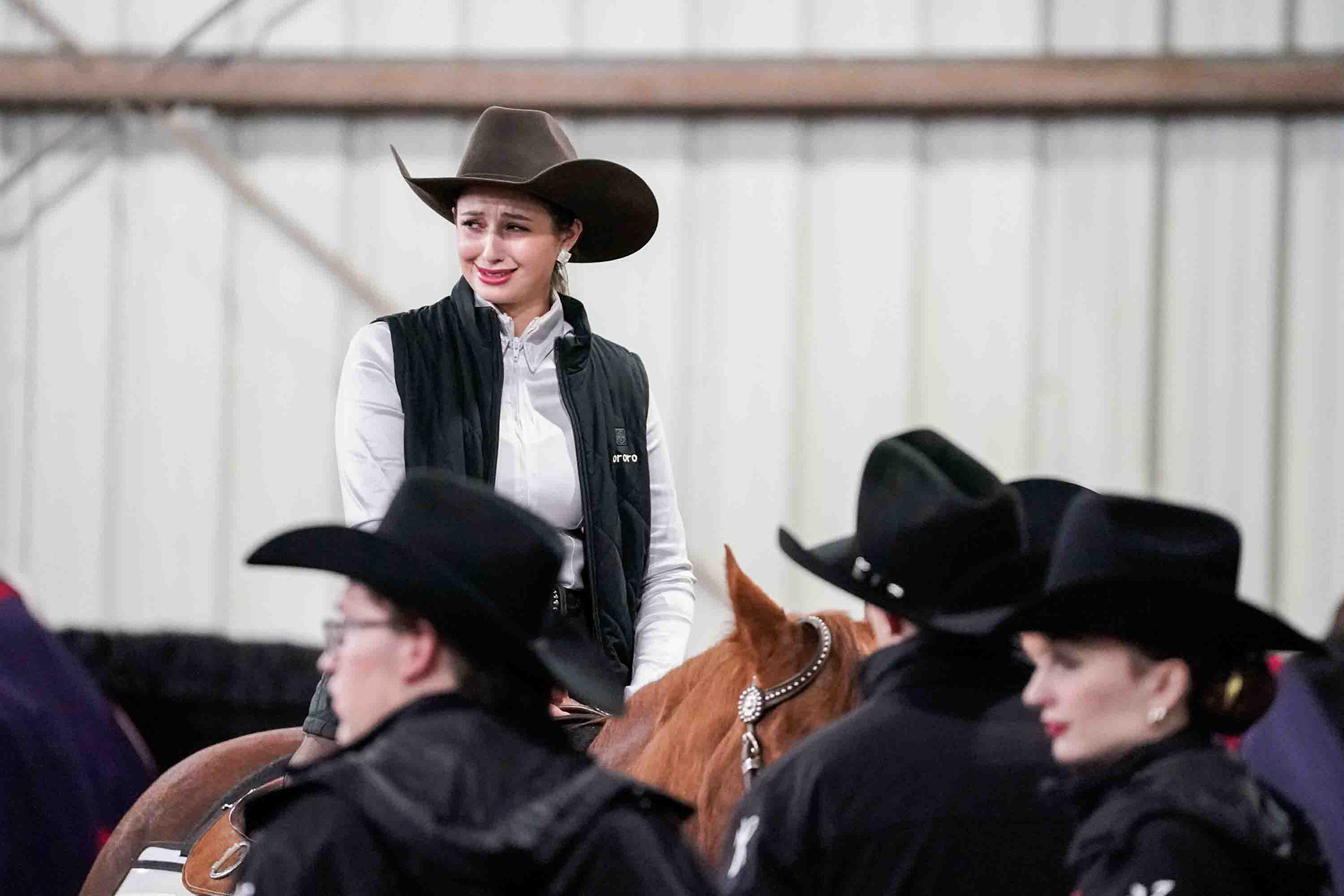
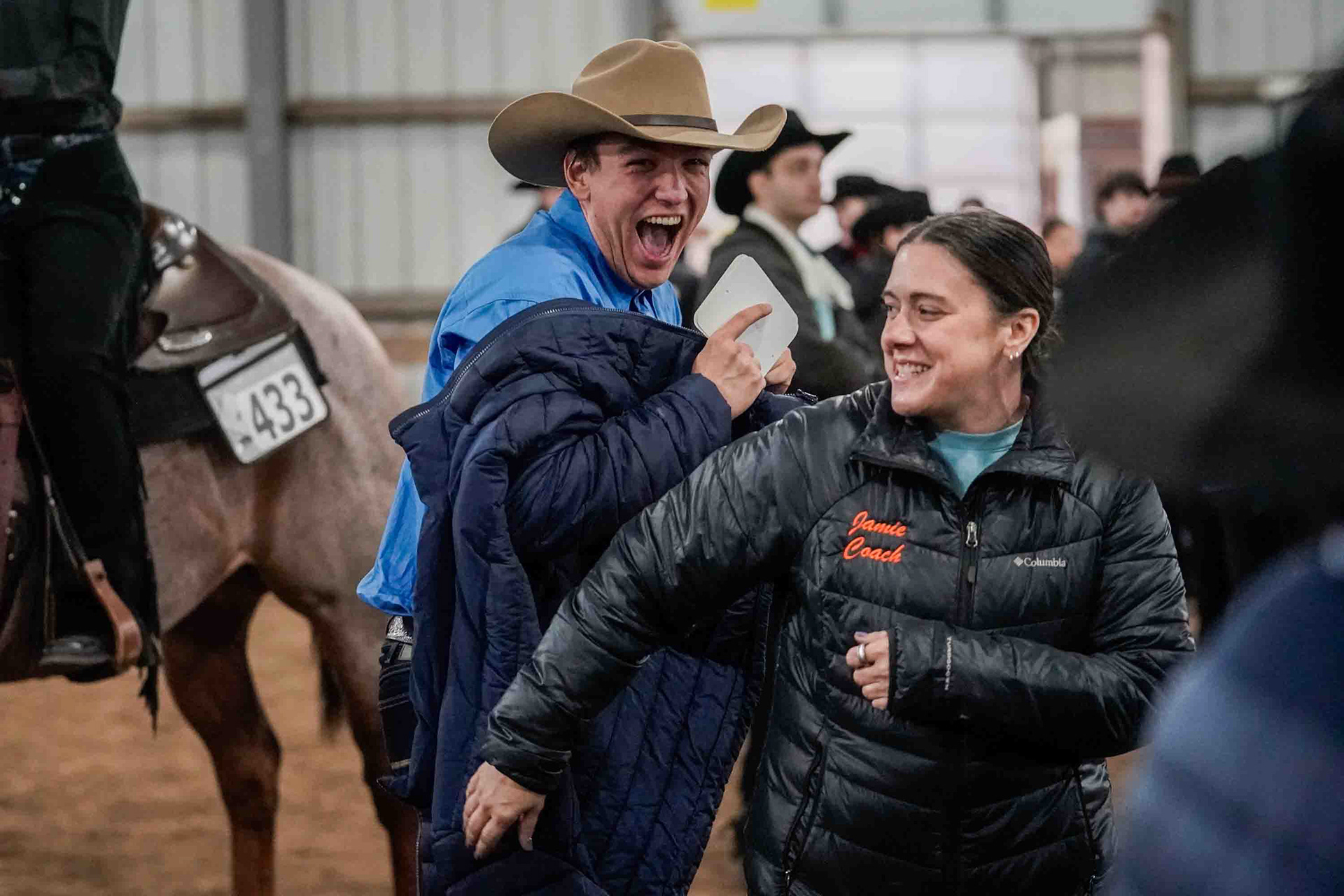
The Syracuse University Western Riding Team competes in these competitions against schools across Upstate New York. They rise before dawn to prepare the arena — and themselves — for a day of judged perfection. Competition requires riders to embody the purest form of American western riding and culture. This photo story follows their
journey: the ritual of preparation, the tension of competition, and the emotional highs and lows of results.
journey: the ritual of preparation, the tension of competition, and the emotional highs and lows of results.